electrospinning
nanofibers from polymer solutions
Electrospinning is a process that uses electrical forces to draw ultra-fine (nano to micrometer) fibers from a polymer solution, creating lightweight, porous nanofiber mats. These mats find applications in areas like filtration, tissue engineering, sensors and advanced composite materials.
Under high voltage, a polymer solution is pushed out of a tiny needle, forming a jet that quickly solidifies into thin, long fibers. By using two different fluids at once, it’s possible to create composite fibers that combine the best features of both materials.
Below are two videos from the production process: one shows fiber formation using a single polymer solution, and the other demonstrates a two-fluid setup for creating composite fibers.
Left: Fiber formation using a single polymer solution.
Right: Two-fluid setup for creating composite fibers.
Below are two images capturing the fibers produced through electrospinning. The optical image shows the overall structure, while the scanning electron microscopy image reveals the fine details and texture at a microscopic level.


I have produced fibers using a variety of materials, including biodegradable polymers, liquid crystals, and shape memory materials. Each material offers unique properties, which open up a range of possibilities.
These fibers have been explored for different applications such as sensors, filtration membranes, medical devices, and composite materials, demonstrating the versatility and potential of the electrospinning process.
Below are images showing liquid crystals on their own and integrated within fibers. These liquid crystals, similar to those used in LCD displays, offer unique optical properties that can be harnessed for smart materials and innovative applications.


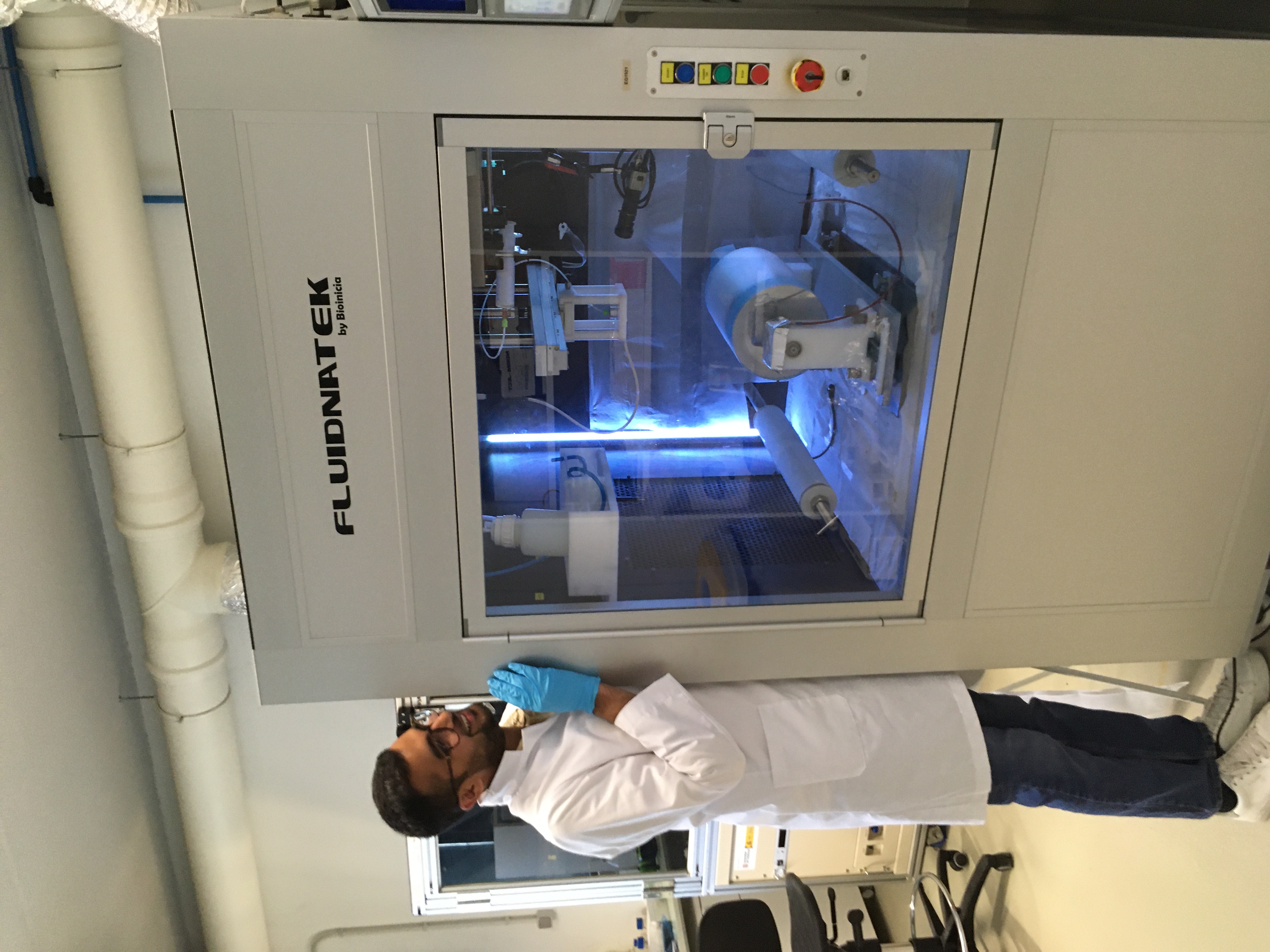
Holding a PhD in electrospinning, I have gained hands-on experience by designing my own setups and operating a range of machines—both commercial and self-built. My work has taken me across Luxembourg, Portugal, Spain, and Slovenia, where I explored innovative techniques to produce high-quality nanofibers. Below are images and videos that capture the process and showcase the intricate results of these projects.

Below is a short video showing an interesting experiment where we measure the force between two liquids. It’s a fun glimpse into the hidden forces that help shape our work.
Interested in electrospinning? My services are available for hire and collaboration—let’s bring your project to life!